Puzzle strategy guide
Sort Solver
A sort solver does not have to mean a black-box tool that plays the puzzle for you. For most players, the most useful kind of solver is a repeatable way to read the board, test a few moves mentally, and understand why one pour opens the level while another creates a dead end.
This guide focuses on color sort solver thinking, water puzzle solver workflows, and practical helper habits you can use while playing bottle, tube, liquid, and color sorting puzzle games. The goal is simple: make hard levels feel readable without turning the game into a fully automatic answer machine.
Sort Solver Basics for Color and Water Puzzles
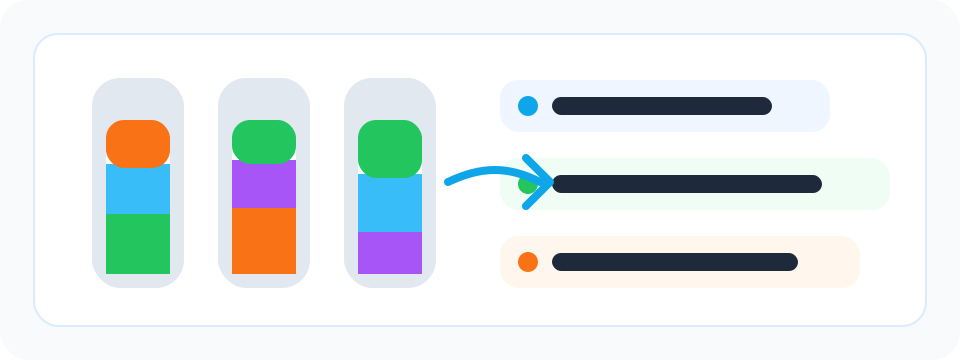
Color sorting puzzles and water sorting games look different on the surface, but many of them share the same core logic. You are usually grouping matching colors, protecting empty space, and planning moves so that the next state of the board has more freedom than the current one. A good puzzle solver workflow starts with those three ideas before it thinks about exact move counts.
In a water puzzle solver mindset, every bottle is a small stack. The visible top color decides what can move now, while the hidden lower colors decide what will matter later. In a color sorting puzzle helper workflow, you read those stacks like a queue of problems: which color is nearly complete, which color is trapped, and which container can safely act as a buffer?
This is also why solver-style thinking works across water sort games, ball sort games, block sorting puzzles, and other sort games. The objects change, but the pressure points stay familiar: avoid burying useful pieces, keep at least one temporary space when possible, and make moves that reveal new information instead of simply making the board look neat.
How Color Sort Solvers Work
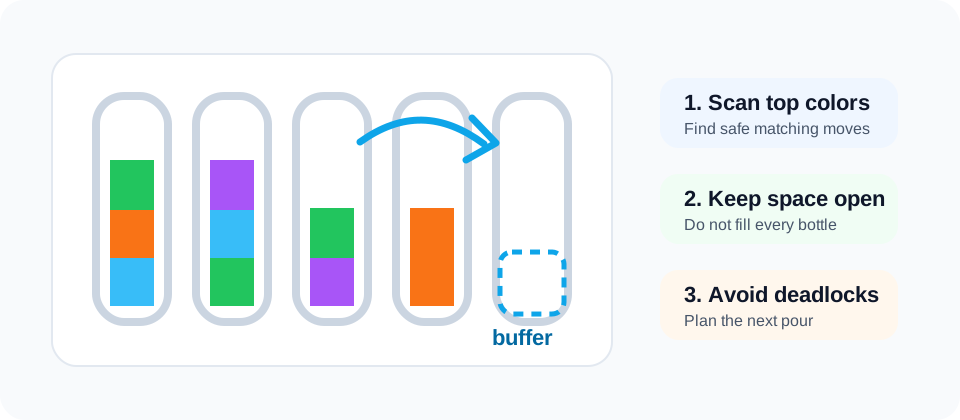
Most color sort solver logic is built around state analysis. A state is the current arrangement of colors across bottles, tubes, or containers. From that state, the solver checks legal moves, scores which moves improve the board, and avoids moves that reduce future options too quickly.
Human players can use the same idea without calculating every branch. Before you pour, ask what the move accomplishes. Does it join matching colors? Does it free a buried color? Does it preserve an empty container? Does it create a container that can receive more of the same color later? If the answer is no, the move may be legal but weak.
- Group matching colors when the destination has enough space to become useful again.
- Treat empty bottles as planning tools, not as containers that must be filled immediately.
- Avoid deadlocks by checking whether each mixed bottle still has a possible exit path.
- Preserve at least one flexible container when the level has many mixed stacks.
- Prefer moves that reveal hidden layers over moves that only move a problem sideways.
Grouping logic
The safest groups are usually colors that already have two or more layers together. When a color is close to completion, it can become an anchor for the rest of the level. Finish it only if doing so does not consume the last empty container.
Bottle movement strategy
A useful bottle movement strategy is to name each container by its job: finished color, temporary buffer, blocked stack, or active target. That small habit makes it easier to see why a move matters.
Using a Puzzle Level Editor to Analyze Sorting Games
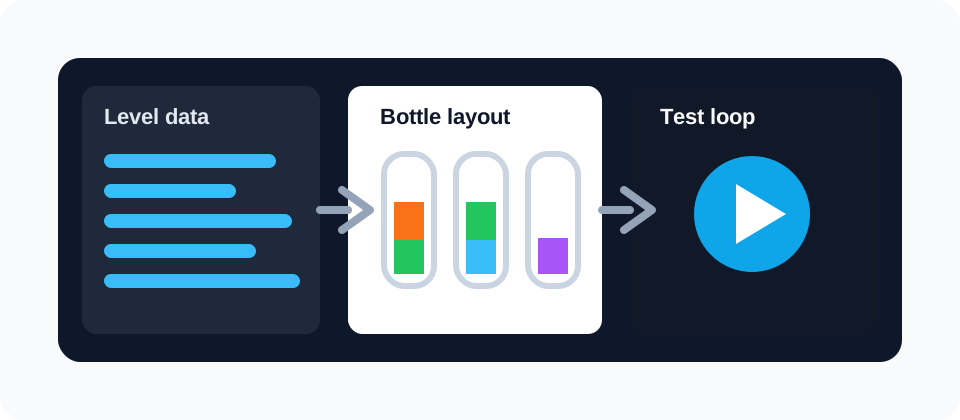
A level editor can be a quiet but powerful way to understand sorting mechanics. Instead of only playing finished levels, you can build small layouts, change the number of bottles, adjust color order, and see how a puzzle becomes easy or difficult. That makes editor-based analysis useful for designers, developers, and players who like to understand why a level works.
The GitHub project water-sort-game-editor is a Cocos Creator based level editor for water sorting style puzzles. It can be useful for testing puzzle layouts, generating level data, experimenting with bottle configurations, and learning how small changes affect the solving path. For example, adding one empty bottle may turn a cramped level into a relaxed one, while hiding one key color under the wrong stack can make the same level much harder.
This is not something you need for casual play, and it should not be treated as an advertisement for a magic solver. Think of it as a workshop for puzzle structure. When you can edit a layout and test it, you start to notice patterns that ordinary play can hide: where deadlocks come from, why buffer space matters, and which color placements create satisfying difficulty.
- View the Cocos Creator water sort game editor on GitHubUseful for studying level data, bottle layouts, and editor-assisted puzzle analysis.
Online Sort Solver Tools
Some players and puzzle makers also use online solver tools when they want to test custom layouts or check whether a level has a valid solution. These tools can be useful for debugging a puzzle design, comparing a planned solution with a generated one, or studying why a layout gets stuck.
One example is an advanced water puzzle solver tool that lets users experiment with custom puzzle layouts. It is worth treating tools like this as analysis aids rather than the main way to enjoy the game. If you rely on a solver for every level, you skip the part of the puzzle where your own planning improves.
- Open an online water puzzle solver toolUse sparingly for custom layout testing or puzzle design checks.
Best Color Sort Puzzle Strategies
The best sorting puzzle strategies are simple enough to remember while you play. You do not need to calculate the whole level perfectly. You only need to keep the board flexible, reduce clutter, and avoid moves that trap colors under layers you cannot access later.
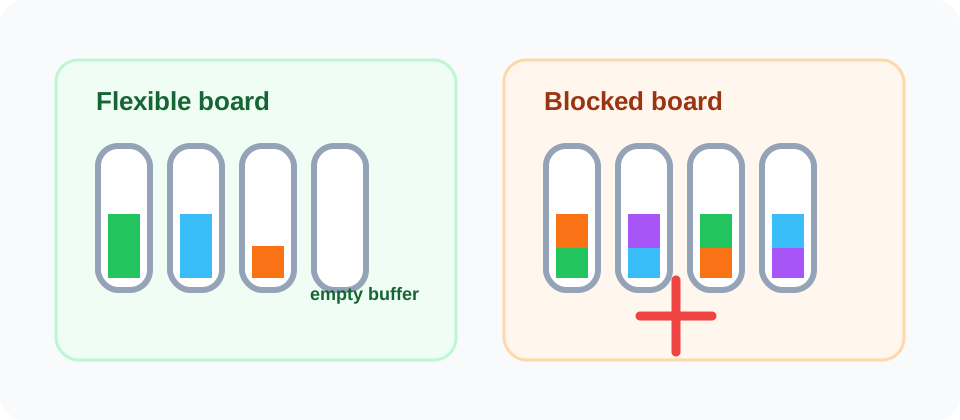
Start by preserving empty bottles. An empty container is the closest thing a player has to an undo button. It lets you lift a blocking color, park a partial group, or move a stack out of the way long enough to reveal the layer underneath. If you fill every empty bottle early, the puzzle may still be solvable, but your margin for error disappears.
Planning ahead matters most when two colors compete for the same space. Before moving a color into a bottle, check what will sit on top afterward. If that top color cannot move again, the bottle becomes a wall. Good water sort level helper thinking is often about preventing those walls before they form.
Reducing unnecessary moves is another underrated habit. Extra pours are not always bad, but random pours create noise. Each move should complete a group, free a hidden color, protect a buffer, or set up a clear follow-up. If a move does none of those things, wait and scan the board again.
Finally, isolate colors early when the opportunity is clean. If a color already has a strong group and you can finish it without spending the last empty bottle, do it. A finished color removes one source of confusion and gives the rest of the level more room to breathe.
- Keep one empty bottle open until you know why you are using it.
- Plan two or three pours ahead before committing to a crowded stack.
- Move colors to reveal hidden layers, not just to make a prettier board.
- Finish a color when it does not trap another important color.
- Avoid splitting a nearly complete color across too many containers.
Play Water Sort Puzzle Online
Once you understand the workflow, the best practice is to play real levels and pause before each important pour. Sort Water Now is a good place to test these habits because it follows the familiar water sorting puzzle rhythm: read the bottles, group colors, protect empty space, and solve the level step by step.
If you want more sorting challenges after that, the Sort Games collection on Cocos includes water sorting games, color sorting games, object sorting puzzles, and other browser-friendly sorting games. Use this guide as a helper beside the game, not as a replacement for the puzzle itself.
- Play Sort Water Now OnlinePractice the sort solver workflow in a free browser water sorting puzzle.
- Explore more Sort GamesFind more sorting puzzle games on Cocos.
Sort Solver FAQ
A color sort solver is a strategy or tool used to analyze color sorting puzzle states, plan legal moves, preserve empty containers, and avoid deadlocks.
No. This page is a strategy guide and helper workflow for puzzle analysis. It explains how to think through color sort and water puzzle levels without presenting itself as an automatic AI solver.
It helps players read bottle layouts, identify useful color groups, protect buffer space, and choose moves that keep future options open.
Yes. A level editor can help you test bottle configurations, generate level data, and understand how small layout changes affect difficulty.
You can practice them in Sort Water Now on Cocos, then explore more sorting puzzle games in the Sort Games collection.